 ABOUT:SubJudice.art

SubJudice.art
Community-Governed Framework for Art.
Born of Procedural Injustice.
The Brooklyn Lyceum was stolen by legal chicanery.
The plaintiff failed to serve opposing counsel.
That one error — among a stream of others — makes the entire foreclosure void.
Join the arts trust, born out of the ashes of the Brooklyn Lyceum:
- ✦ Earn a permanent vote by looking at 2 dates
- ✦ Earn a permanent vote by showing us you were a Lyceum Denizen
- ✦ Earn 3 votes by becoming an advisor (with annual renewal)
- ✦ Earn up to 12 votes — good for a year — with submissions of your work
20 years of theater lost on 1 primary & 5 other fatal flaws ↓
VOID FROM THE START
A theatre foreclosure built on fatal legal errors.
The fatal-est flaw: attorney never served motion papers.
This makes every subsequent proceeding — including the foreclosure judgment and sale — void ab initio.
Less than required notice is no notice at all ↓
Financial Services Vehicle Trust v. Law Offices of Dustin J. Dente et al.
The defendant failed to give timely notice of her motion — the plaintiff did not receive at least 13 days' notice, the minimum required for motions served by regular mail (CPLR 2103[b][2]; 2214[b]).
Absence of proper service deprives the court of jurisdiction to entertain the motion. Since the Supreme Court was deprived of jurisdiction, the resulting order and judgment were nullities.
Until then — we're building something new ↓
There's a real chance the Lyceum can return, in some form.
Until then, subjudice.art — a performing arts series born of this fight.
- ✦ 10-minute plays to be performed
- ✦ One acts & full lengths for staged reading
- ✦ Music for gigs. Even dance.
- ✦ All at a changing set of locales — until 6 EZ Pieces are addressed
We also need advisors and artistic co-conspirators.
Starting an arts trust and getting justice takes a wide range of skills.
The Backstory.
Twenty years. Six fatal flaws. One motion.
For nearly 20 years, there was a theater.
A vibrant community engine and a destination for music, theater, comedy, dance, film, art — and the late-night espresso that fueled it all.
Then, the theater was targeted by a patently pointless foreclosure.
Defined by unending plaintiff misrepresentations and fraud upon the court — actions the judiciary either missed or chose to ignore.
An exhaustive review of the case files revealed:
The initial decision involved a host of non-starter issues — some created by plaintiff malfeasance, some by the court failing to even read the submitted papers or proposed order.
Fatal flaws in the first decision.
Spoiler: No notice cannot result in anything.
6 EZ Pieces — in English, not so much legalese.
Piece 1 — The Notice Piece
Rule: You must tell the other side's lawyer you're going to court.
Broken: The plaintiff knew of the defendant's attorney, negotiated extensions with him, acknowledged receipt of an answer — and then filed a court motion without serving him, or telling the court the attorney existed. Thus, the court would not check to see if opposing counsel was served.
Fraud upon the court by omission by plaintiff counsel.
Piece 2 — The Authority Piece
Rule: You must ask for relief that your cited law actually provides.
Broken: The motion asked for a "Judgment of Foreclosure and Sale." The only law it cited was CPLR 3215 — a statute that authorizes only a simple "default judgment."
A legal mismatch from the start.
Piece 3 — The Evidence Piece
Rule: Your motion cannot cite documents not yet — or ever — in existence.
Broken: The motion, dated October 13, 2009, claimed it was supported by an attached attorney's affirmation dated October 26, 2009. Thirteen days in the future. No such affirmation was attached or ever filed.
Piece 4 — The Matching Piece
Rule: Your documents have to connect to each other.
Broken: The only "Proof of Service" of the complaint on the borrower is attached to an affirmation attached to a motion — where the motion does not cite to the existence of that affirmation. The "Proof of Service" was never properly before the court.
Piece 5 — The Judgment Piece
Rule: A court can only grant judgments based on real requests and real evidence.
Broken in two acts:
— It granted what wasn't asked for. The court entered a "default judgment," not the "judgment of foreclosure" the motion requested.
— It was built on ghosts. The court's judgment order states it is "premised upon" two specific attorney affirmations, both dated the impossible October 26, 2009. Neither affirmation exists in the court record.
The judgment rests on phantom documents.
Piece 6 — The Identity Piece
Rule: You can't get a judgment in a name the other side doesn't know.
Broken: The default judgment was entered not in the original plaintiff's name, but in the name of a new, substituted plaintiff. The defendant received no formal legal notice of this substitution until after the judgment was signed, entered, and served — making them liable to a stranger.
Which is forbidden.
And at least one fatal flaw in the last decision — an impossible finding of fact.
We hope we don't have to go here.
90% of attorneys consulted turned us down flat.
The other 10% at least told us we were right — but the issues were too hot to handle.
So we are sucking it up and writing our own motion on 6 EZ Pieces.
The General Plan.
Fight. Build. Refuse to be silenced.
While we fight for a resolution —
one that could see a theater legacy live again,
or yield enough of the damages to establish a trust for the arts —
we are not waiting.
To that end, we are launching our inaugural call for work.
"Sub Judice."
In the legal world: under judicial consideration —
a status that renders a premature judgment void.
In the creative world: the very state of your work —
under review by a theater community that refuses to be silenced.
The Specific Plan.
Six issues. Each one fatal. The first one fraud.
Each of the 6 issues is fatal to the foreclosure and sale of the theatre.
We have researched these issues until we believe we can go toe to toe with attorneys with decades of experience.
In the end it is simple — the 6 issues are fatal non-starters, with the first being the most egregious:
A fraud upon the court.
Failure to serve opposing counsel.
Next up: a motion to vacate the judgment of default.
If you agree this is simple — and want to be in on the ground floor —
#1 — The Notice Piece.
A notice of motion must be served on any opposing counsel.
If it is not, the court's power to rule on the motion is never invoked.
And if the court's power is never invoked,
any judgment entered on that motion is a nullity.
Here's what happened ↓
The plaintiff knew defense counsel existed.
The plaintiff negotiated with him. Received an answer from him.
But when the plaintiff filed its motion for judgment,
it served the defendant directly —
and never told the court it had a lawyer.
The court never knew.
The court never checked.
The court's power was never properly invoked.
The resulting judgment is void from the start.
#2 — The Authority Piece.
A notice of motion must cite a statute that authorizes the relief requested.
If it does not, the court's power to grant that relief is never invoked.
And if the court's power is never invoked,
any judgment granting that relief is a nullity.
Here's what happened ↓
The motion asked for a judgment of foreclosure and sale -and an order of reference.
It cited one statute: CPLR 3215.
CPLR 3215 authorizes default judgments.
It does not authorize judgments of foreclosure and sale -or- order of refernce.
No other statute was cited.
The plaintiff requested relief the court had no power to give.
#3 — The Evidence Piece.
A motion cannot rely on evidence that does not exist at the time the motion is signed or filed.
If it does, the court is ruling on a record that includes phantom documents.
Here's what happened ↓
The motion is dated October 13, 2009.
It claims to be supported by an attorney affirmation dated October 26, 2009.
That is thirteen days in the future.
No such affirmation was ever attached.
No such affirmation was ever filed.
The plaintiff sought relief on evidence that never existed.
#4 — The Matching Piece.
Every piece of evidence the court relies on must be properly placed before it.
If critical evidence is buried in an unnoticed, uncited attachment,
it is as if it never existed.
The court cannot rule on what it never saw — or what it was not allowed to see.
A judgment based on unseen evidence is a nullity.
Here's what happened ↓
The only proof that the borrower was ever served with the complaint…
is attached to an affirmation…
that was attached to a motion…
but never cited to in the motion itself.
The plaintiff sought judgment without proof of service properly before the court.
#5 — The Judgment Piece.
Flaw One: Unrequested Relief
A court cannot grant relief that was never requested.
If it does, it acts outside its authority.
Any judgment granting unrequested relief is a nullity.
Here's what happened ↓
The motion asked for a judgment of foreclosure and sale.
The court entered a default judgment.
They are not the same.
Flaw Two: Phantom Evidence
A court cannot premise a decision on evidence that does not exist.
If it does, the judgment rests on a phantom record.
A judgment built on nonexistent documents is a nullity.
Here's what happened ↓
The judgment cites two attorney affirmations dated October 26, 2009.
Neither affirmation exists in the court record.
Two fatal flaws. One void judgment.
#6 — The Identity Piece.
A plaintiff cannot change identities in secret.
If a new entity is substituted into a case, every party must be notified.
Without notice, the substitution is invisible.
An invisible plaintiff cannot bind anyone.
Any order obtained by an invisible plaintiff is a nullity.
Here's what happened ↓
The original plaintiff sold the claim.
The court signed an order substituting the new plaintiff.
No one told the defendant.
Then — the new plaintiff obtained a default judgment.
That judgment was entered in a name the defendant did not know,
based on an order the defendant never saw.
A judgment entered by a stranger is void.
And every order that rests on it is also void.
Take a look ↓
Files here soon.
Take Part.
If you believe any of the six issues —
let alone one, especially the first —
are ridiculous,
So · Do · We.
They are so ridiculous that one of two outcomes is inevitable:
— The foreclosure sale is vacated.
The theater returns to programming.
— If immediate return is impractical,
an itinerant arts trust carries the work forward
while the full remedy is pursued.
Either way, the work continues.
We need:
- ✦ Submissions. Plays, music, dance — work that responds to this moment.
- ✦ Advisors. Legal, artistic, marketing, governance. Expertise to match our conviction.
And if you're not sure yet?
Run these Six EZ Pieces by any legal mind you know — especially the first one.
We'll be here when you're ready.
Submit: Sub-Judice Arts Series.
An arts opportunity forged in the heat of fighting for what is just, and right, and required — by law.
Seeking
- ✦ 10-Minute Plays
- ✦ One Act Plays
- ✦ Full Length Plays
- ✦ Music
- ✦ Dance
- ✦ Monologue
How It Works
Submit your work. If selected, we work with you to produce it at TBD venues.
No obligation to produce, perform, or attend — unless you want to.
Your work speaks for itself.
Two shots. One submission.
Selected or not, your submission remains in our library.
When the legal dust settles, every submission received before resolution
will be reviewed again — by our voting members and advisors.
No second fee. No second form.
Just two opportunities from one act of trust.
Review Fee
Varies — covers the time and expertise of our review.
Non-refundable. No other fees required.
Before you submit — the Six EZ Pieces are the foundation of this cause.
Read them. Sit with them. Then send us your work.
Voting Members.
Submit work. Earn votes. Shape what comes next.
Every submission is also a vote.
The more you give, the more you have a say.
Vote Weights
- ✦ Ten-Minute Play — 1 vote
- ✦ One Act Play — 2 votes
- ✦ Full Length Play — 3 votes
- ✦ Music — 1 vote
- ✦ Dance — 2 votes
- ✦ Monologue — 2 votes
Maximum Votes: 12
You may hold up to 12 active votes at any time.
If a submission would put you over 12, the excess is banked — held in a pending state.
As active votes expire, banked votes automatically backfill, up to the 12-vote cap.
Banked votes inherit the expiration terms of the original submission.
Votes Expire
- ✦ One full calendar year from submission date, or
- ✦ One full calendar year after the theater sale is vacated or a settlement is reached —
whichever is later.
Voting is held at least three times per year.
All voting members in good standing may participate.
Not ready to submit? Advisors are also needed —
legal, artistic, marketing, governance.
No votes required, but possible. Add expertise and conviction.
Advisors.
Legal. Artistic. Marketing. Governance.
Expertise is also contribution.
Each advisor, during their term of service, holds 3 votes in all production selections.
Votes are tied to active service.
When a term ends, the votes terminate.
Advisors may also submit work and earn votes as Voting Members.
The two roles are independent. Votes stack.
Legacy Advisors — You Were There ↓
You ran the box office. You swept the stage. You pulled shots until your wrist gave out. You bought that latte. You saw the shows no one else saw. You performed. You stayed after everyone else went home.
The theater lived through you. Now we need you to live in it again.
One vote. In perpetuity.
That vote counts in every production selection,
added to all others, weighed equally,
never diminished by time or absence.
One ask: vote once a year.
Not to prove yourself. Not to earn your place.
Just to stay in the room with us.
A single click. A single choice. A signal that you're still here.
This is not a term. This is not a rotation.
This is a recognition that some knowledge and effort and experience
cannot be earned — only carried.
If you were a denizen of the deep, and can convince us you were,
this seat is yours for as long as the trust exists.
No submissions required. No expertise to prove.
No cap. No expiration.
Just: you were there. You remember. You vote. You stay.
Work Become
Advisor Observer
Argonaut Fuel
Argonaut Press
Release Blow by
Blow Need CPLR 5704
Attorney
WHO ARE WE?
The Brooklyn Lyceum - the theater/gym
SWASLU - The espresso never ended. It just moved.
There was the original 1833 Lyceum and then us, the 1994 Lyceum.
We are amusement, expression, and the elixir, espresso (swaslu.com).
We are a forlorn bathhouse bought in a run-down neighborhood and a dream.
We are the men and women carved in stone above the doors, and the baristas who served espresso to commuters at 7am.
We are twenty years of folding chairs on risers.
Indie film festivals. Cabaret. Circus arts. Moby Dick: the sermon in Green-Wood Cemetery.
We are the worm's-eye view of the tiny upstairs café.
We are the late nights and the early mornings and the people who stayed for both.
We are a motion dated October 13, 2009—
that cites an affirmation dated October 26.
Thirteen days in the future.
That affirmation never existed.
The court entered judgment on it anyway.
We are a request for foreclosure judgment
filed under a statute that doesn't authorize one.
We are a default judgment no one asked for.
We are two phantom affirmations cited in an order
that the clerk cannot produce because they were never filed.
We are the attorney the plaintiff negotiated with,
received an answer from, granted extensions to—
and then erased from the RJI before asking the court for relief.
We are a judgment entered in the name of a stranger
because no one bothered to tell us the plaintiff had been substituted.
We are the papers themselves.
And they show, on their face, without interpretation, without excavation,
that what was done to us could not lawfully be done.
We are the ones who did not give up.
When 90% of the attorneys just said no —
and 10% said it was too hot, too old, too hard,
we kept reading. We kept asking. We kept the file open.
We are the ones who uncovered these impossible non-starters.
A motion that cites evidence from the future.
A judgment that grants relief no one requested.
A record that omits the lawyer the plaintiff knew existed.
A verdict built on documents that were never filed.
A verdict that binds no one because no one was told of new Plaintiff.
We are a building sold at auction — illegally, arts be damned.
We are what was left behind when the auction gavel fell.
We are the few who refused to become a footnote.
We are SubJudice.art.
We are not yet a building again. We are not yet a trust.
We are a community seeking judicial re-review —
and a judgment rendered on us will be void when the re-review is complete.
We are the 10%.
The ones who read the Six EZ Pieces and felt their spine click into place.
The ones who were there, or wish they had been, or recognize a lost world when they see one.
We are you. If you were there. If you stayed. If you're ready to come home.
If you ran the box office. If you swept the stage. If you pulled shots until your wrist gave out.
If you bought the latte. If you saw the shows. If you stayed after everyone else went home.
If you just showed up, again and again, until showing up became who you were.
We are not waiting for the building to return.
We are the building now. We always were. We just dematerialized under the immense weight of a legal system bound to get one answer, whether right or wrong.
We will be back. Welcome home.
Ten-Minute Plays.
The six pieces are not a requirement.
They are an invitation.
If not, send us what you carry.
Wherever it leads you.
The One Acts.
One Act Plays that speak from the heart
about the world we live in,
or the world we should — could — live in.
Work that shines a light on what lies beneath the surface.
Work that explores the things we all carry.
The six pieces are not a requirement.
They are an invitation.
If not, send us what you carry.
Full Length Plays.
Plays that speak from the heart —
to show us something that matters,
or something we can't resist,
or something we can't avoid.
The six pieces are not a requirement.
They are an invitation.
If not, send us what you carry.
WHY NOW?
For years, we chased dead ends.
Every path led to the same wall:
a judgment confusing on many levels because
it should not stand, could not stand, yet stood anyway.
We read the same files over and over and over and over …
We called attorneys who told us we were right—
and then told us they couldn't, or wouldn't, help.
We knew something was wrong.
We couldn't name it — because we did not understand the law.
Then, just after Christmas, a badly broken ankle.
Bedridden. No work. No meetings. No errands.
Once the pain and swelling subsided to manageable levels —
there was no escape from the stack of paper and the dizzying array of issues.
And there it was. Not hidden in a deposition. Not buried in a footnote.
Right there, on the face of the RJI:
No opposing attorney listed.
But the plaintiff had been negotiating with our attorney for months.
Extensions. An answer. Acknowledgment of representation.
They knew his name. They had his address.
They just chose not to tell the court.
That's not a mistake. That's fraud.
All the other fatal flaws — the future-dated affirmation, the phantom documents, the unrequested judgment, the stranger's name on the verdict — they matter. Each one alone is fatal.
But this was the thread.
Pull it, and the whole thing unravels.
So now we pull.
Sixteen years. One broken ankle. One thread.
Now we're here.
Music.
Singer-songwriter. Small band. Orchestra.
Work that speaks.
Work that resists.
Work that remains.
The six pieces are not a requirement.
They are an invitation.
If not, send us what you carry.
Dance.
Solo. Duet. Ensemble.
Site-specific. Proscenium. Street.
Work that lives in the body
because the body was the evidence
the court refused to see.
Choreography that carries what we carry.
Movement that will not be silenced.
The six pieces are not a requirement.
They are an invitation.
If not, send us what you carry.
Monologue.
A single voice.
Unamplified.
Unanswered.
Someone alone in a room
who refuses to stay silent.
The six pieces are not a requirement.
They are an invitation.
If not, send us what you carry.
If you have a voice that needs a room,
we are building one.
WHY BOTHER?
TL;DR — because if there's no due process for a theater,
there's probably no due process for anyone.
THE REST OF THE STORY
Because a foreclosure is just a form.
Until it's your door.
Because a judgment entered without notice to counsel
is not a judgment — it's a theft with a stamp on it.
Because the plaintiff knew our attorney existed,
negotiated with him, received an answer from him,
and then erased him from the record before asking the court for relief.
That is not a scrivener's error. That is a deliberate act.
Because if they could do it to us —
with a twenty-year theater, hundreds of events, thousands of patrons —
if they could do it to us, and get away with it for sixteen years,
then they can do it to you.
Because the same statutes that should have protected us
are still on the books.
The same courts that should have caught this
are still open for business.
The same attorneys who told us it was too hot, too old, too hard
are still the ones you call when someone comes for your door.
Because if due process is optional here,
it is optional everywhere.
We are not fighting for a building.
We are fighting for the proposition that the rules mean what they say.
If the rules don't protect a theater,
they don't protect anyone.
That's why we bother.
That's why we're still here.
That's why we will not stop.
Contact Us
Send us a message — or just your email to join the mailing list. At least one is required.
Partner With Us.
You run a theater. A festival. A presenting house.
A space that believes in the power of live performance to do more than entertain.
We are SubJudice.art.
We are not yet a building. We are not yet a trust.
We are a community of artists, co-conspirators, and former denizens of a lost theater —
gathering work in response to six fatal legal errors that stole a stage from Brooklyn.
Why Partner With Us?
Because we come with work that is:
- ✦ Ready. Plays, music, dance, monologues — submitted, reviewed, curated, and waiting for a stage.
- ✦ Audience-tested in spirit. Work born of the same ethos that filled a theater for twenty years: intimate, urgent, unwilling to look away.
- ✦ Low-barrier. No elaborate tech riders. No weeks of load-in. Work designed to inhabit a room, not conquer it.
Because we come with artists who:
- ✦ Want to be in your space. Not just for a night — for a conversation, a residency, a relationship.
- ✦ Understand the economics of small houses. We are not asking for your full budget. We are asking for a foot in the door.
Because we come with a story:
- ✦ A sixteen-year foreclosure built on fraud.
- ✦ A judgment void from the start.
- ✦ A community that refused to become a footnote.
- ✦ An audience that has been waiting for the curtain to rise again.
What Does Partnership Look Like?
Let's figure it out together.
A co-production. A rental at cost. A slot in your off-season or off-night or off-slot.
A reading series. A workshop residency. A single performance.
We are itinerant. We are adaptive. We are persistent.
We do not need you to save us.
We need you to share your stage.
Why Now?
Because the motion is nearly ready. The clock starts soon.
The judgment that stole the Lyceum will be vacated —
or we will pursue every remedy available until it is.
Either way, the work exists now.
It is not waiting for a resolution.
It is waiting for a room.
We are looking for partners who believe:
— That a show does not need a Broadway house to matter.
— That a community does not need a permanent address to be real.
— That a theater is not a building. It is what happens inside it.
If that is you — let us talk.
We bring the work. You bring the stage.
The audience will find us both.
SWASLU and the Argonauts
The last living piece of the Lyceum café — and the community building around it.
The Backup Quest
SWASLU's inexorable espresso evolution is also spearheading a much more volatile Lyceum backup plan — to the soon-to-be-pending motion to address what cannot be ignored:
Failure to serve the Lyceum attorney any papers.
If the court refuses to vacate — something has to give ↓
The official docket shows:
- ✦ Our cross-motion was filed on October 19, 2012
- ✦ The judgment was entered on October 26, 2012
But the court found otherwise.
We want independent witnesses to confirm the docket date sequence — so we have an airtight record for any future proceedings.
Did our Cross-Motion to dismiss come before — or after — the entry of the Judgment of Foreclosure?
We need Argonauts to:
- ✦ Search a court website as a guest
- ✦ Enter our case number
- ✦ Scan the docket for two dates:
— Cross-Motion entered: October 19, 2012
— Judgment of Foreclosure entered: October 26, 2012 - ✦ Fill out a short affirmation about the date sequence
(we'll provide the simple 1-page template) - ✦ Mail the affirmation to us, along with your contact email
That simple observational act earns you a permanent vote in the arts trust — and makes you a witness to the judicial absurdity yourself.
SWASLU is the last living piece of that café
The Lyceum Café was, in many senses, a heartbeat — always seeking better quality espresso as its base, always the height of taste and energy fueling the Lyceum.
Born during Hurricane Sandy — when the power went out and a hand-pulled ROK espresso machine kept the elixir flowing.
The espresso never ended. It just moved.
Since then: Brooklyn street fairs and craft markets, two culinary festivals in Augusta Maine, two summers of roadside stands in Midcoast Maine. Sold on a "pay what you wish" basis — for a roadside latte or americano.
Often, after tasting, one question:
Where can we find you? Where can we find SWASLU?
We want to answer that question.
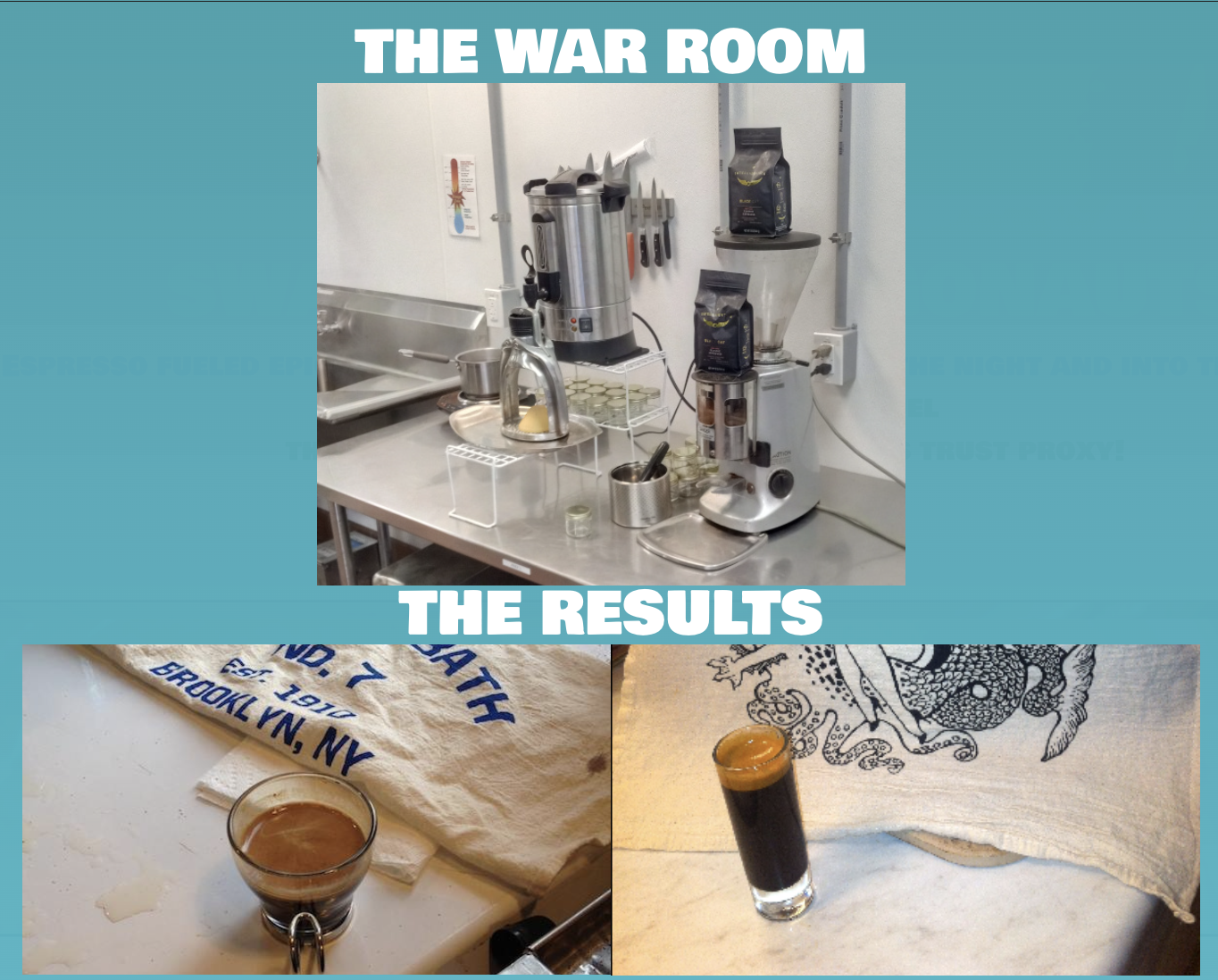
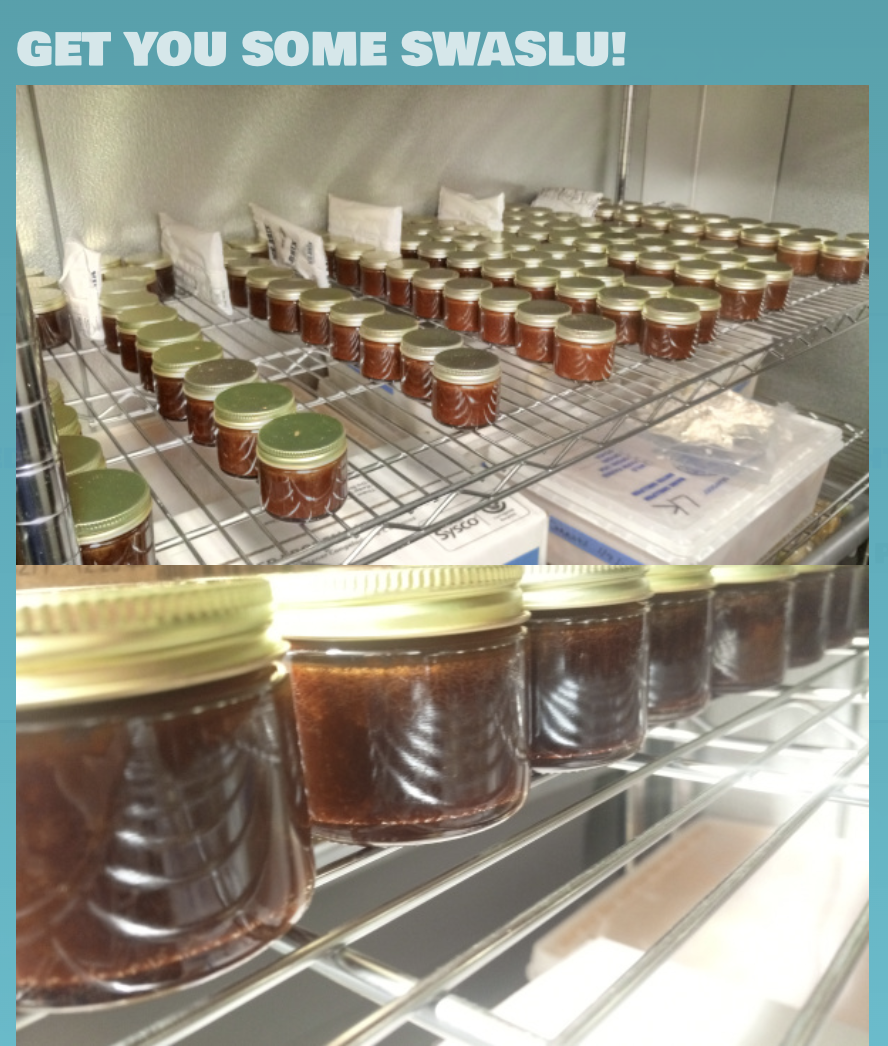
Double shots of espresso skillfully drawn into 2oz glass jars and frozen — oxygen sealed out, lasting essentially forever — ready to come home to the Lyceum, wherever comes next, on the road, or delivered to you.
A jar of SWASLU, some hot water, and a frother —
and you can have top-notch lattes and americanos at home.
All without an espresso machine.
The Deposit Program
We are actively pursuing two brick-and-mortar purchase opportunities
and one lease — any of which could have us open as early as May 2026.
Our commitment: within 2 years we open brick-and-mortar —
or we return every deposit in full. No hard feelings. That's our promise.
This is not a donation.
It is a refundable deposit doing double duty — funding SWASLU espresso operations in the interim and the Lyceum legal fight, while earning you a discount on up to 12 bankable jars per month and a voice in what the Lyceum becomes.
Or, if you prefer — proceeds from up to 12 jars per month
sold to the general public, directed to a nonprofit you choose.
Anything beyond 12 jars is purchased at current retail.
How the Discount Works ↓
A jar of SWASLU retails at $5 in 2026 — our baseline price, adjusted annually.
- ✦ Deposit $100 — 2% off up to 12 jars/month, forever. At $5 that's $4.90.
- ✦ Deposit $500 — 10% off up to 12 jars/month, every year.
- ✦ Deposit $2,500 — half price espresso, forever, up to 12 jars/month.
Every $100 deposited = 2% off up to 12 jars/month.
The discount moves with the price. You always pay less than everyone else.
Your Vote in the Arts Trust ↓
1 vote per $500 deposited. Votes are tied to your active deposit balance. Withdrawal or repayment retires your votes — except that any votes earned while your deposit was active are guaranteed valid through at least one full calendar year after legal victory or settlement, whichever comes last.
Conversion option: at any time before repayment, forgive your deposit and permanently keep exactly half your votes. No rounding. Discount ends with deposit. Converted votes survive everything.
Your Options ↓
- ✦ Option A — Personal: Take your discount in espresso — shipped, delivered, pop-up markets, or future brick-and-mortar.
- ✦ Option B — Designate: Let us sell on your behalf and direct the value to a nonprofit of your choice.
- ✦ Option C — Split: Some jars for you, some cash to a nonprofit. You decide the split at redemption time.
How Fulfillment Works ↓
We fulfill on a best-effort basis: deliveries, weekend pop-ups, markets, brick-and-mortar — using existing licenses and permits while we build toward a permanent home.
- ✦ Earlier depositors have first priority in the queue
- ✦ Nonprofit-designated jars get whatever remains
- ✦ What we can't fulfill in a given month gets banked as a credit — tracked, real, and redeemed when capacity allows
Your Rights as a Depositor ↓
- ✦ Principal back — your full deposit returned with 6 months notice, anytime
- ✦ Banked jars resolved — after legal victory or negotiated settlement, demand fulfillment within 12 months in any split of physical jars to you and/or cash to a nonprofit of your choice
- ✦ Votes protected — any votes earned while your deposit was active remain valid through at least one full calendar year after legal victory or settlement, whichever comes last
The Arts Trust
One class of vote. Equal weight. Regardless of how it was earned.
All votes are stackable.
Observer, Fuel, Denizen, Advisor, Submission —
every vote you earn across every category adds up.
The more ways you participate, the more weight you carry.
Who Votes ↓
- ✦ Observer Argonaut — 1 permanent vote, earned by act, never revoked
- ✦ Fuel Argonaut — 1 vote per $500 deposited, tied to active deposit. Votes protected through one full calendar year after victory or settlement. Conversion: forgive deposit, permanently keep half your votes
- ✦ Denizen Advisor — demonstrated you crossed the Lyceum threshold. 1 permanent vote, never revoked
- ✦ Regular Advisor — 3 votes, held for duration of active advisor status. Renewed annually by casting at least one vote during the year
- ✦ SubJudice.art Submission — 1 to 3 votes depending on type, stackable. Valid for one full calendar year after submission — or one full calendar year after legal victory or settlement, whichever is later
Every vote earned across every category is additive.
Participate in more ways. Carry more weight.
How Decisions Are Made ↓
- ✦ Simple majority — programming, artistic direction, day-to-day creative decisions
- ✦ Two-thirds supermajority — structural decisions: ownership, entity, mission, major capital
- ✦ Absent two-thirds — our vote decides. Full stop.
"The last living piece of the Lyceum is ready to come home.
Help us open the door."
Art in a Time of Injustice.
While we fight our injustice —
we prepare for the inevitable.
Arts return to a theater.
— or —
Arts elsewhere, funded by a trust.
Submit your work for review.
Join the theater as a member. Join as an advisor.
Because not serving an attorney = no service = void from the start.
No matter how much time has passed.
Partner Schools.
Theater. Music. Dance. Art. Law.
You train the next generation of artists, advocates, and arts administrators.
We are SubJudice.art. We are not yet a building. We are not yet a trust. We are a community of artists and co-conspirators — and a soon-to-be-filed motion.
We are also a future resource.
Why Partner With Us?
Because your students need future resources — stages, opportunities, and organizations that understand what it means to build something from nothing.
- 🎭 Theater & Musical Theater
- 🎶 Music
- 💃 Dance
- 🎨 Visual Art / Art History / Curatorial
- ⚖️ Law / Arts Advocacy
What Does Partnership Look Like?
That is open for discussion.
At minimum: priority submission review for alumni of partner schools.
Beyond that — let's build it together.
We are itinerant. We are adaptive. We are persistent.
We do not need your budget line. We need your focus.
Why Now?
Because the motion is soon to be filed. The clock is running.
The judgment that stole the Lyceum will be vacated —
or we will pursue every remedy available until it is.
Either way, the work exists now.
It is not waiting for a verdict.
It is waiting for you.
Your students will graduate. They will book venues, manage contracts,
advocate for creators, make work that matters.
The question is what options will they have to present.
If that question matters to you — let us talk.
Arts Trust.
We want the building back.
We want the risers and the espresso machine and the worn spot on the stage where the soloist stood.
We want the folding chairs and the lobby light and the sound of 150 people settling in at curtain.
That is the goal. That is what we are fighting for.
But we are realists.
A judgment may come that says: you are right. The foreclosure was void. The sale was void.
But with the building in use as a gym, it may not currently lend itself to theater as it once did.
If that happens, we will use the building. Somehow.
But we will have something else.
A portion of the damages. A trust. A mandate.
Not a memorial. Not a plaque.
A living fund that does what the theater did:
gathers artists, audiences, and the people who serve them both,
in whatever space will have us.
Itinerant. Adaptive. Persistent.
We will produce the work we always produced.
We will pay artists what they always should have been paid.
We will find the empty storefronts, the borrowed stages, the unexpected rooms —
and we will make them theaters for a night, a week, a run.
The Lyceum was never just a stage.
It was a gym. A batting cage. A wedding hall. A café.
The espresso machine ran at 7am for commuters
and at midnight for theatergoers.
Food and drink were never the side act — they were the glue.
The espresso never ended. It just moved.
That model lives on in SWASLU —
the café thread carried forward from the Lyceum.
Not just nostalgia. An economic engine.
Swaslu carries the torch of possiblity.
It belongs in whatever results.
Wherever the trust lands — a returned building, a borrowed space, a residency —
the table is part of the plan.
It always was.
The building was never the thing.
The thing was what happened inside it.
If we cannot have the building immediately,
we will take the thing elsewhere.
This is not a backup plan.
This is the same plan, adapted to a different future.
Either way, the work continues.
Either way, we remain.
Either way, the trust serves the art —
and the art serves the community that refused to let it die.
The building is the dream.
The trust is the certainty otherwise.